Riverside Energy Group leads Michigan’s transition to cleaner natural gas through innovative carbon capture
As Michigan’s largest natural gas producer, Riverside Energy Group (Riverside) has reached a pivotal moment. Producing over half of the state’s domestic natural gas supply and operating over 5000 wells across 650,000 acres, Riverside was launched in 2010 by Rob Gerhard and his partners, with the aim to expand their mining investments business into the oil and gas space. Last year marked a turning point as the company commissioned two groundbreaking initiatives, designed to transform traditional operations into a model for sustainable energy.
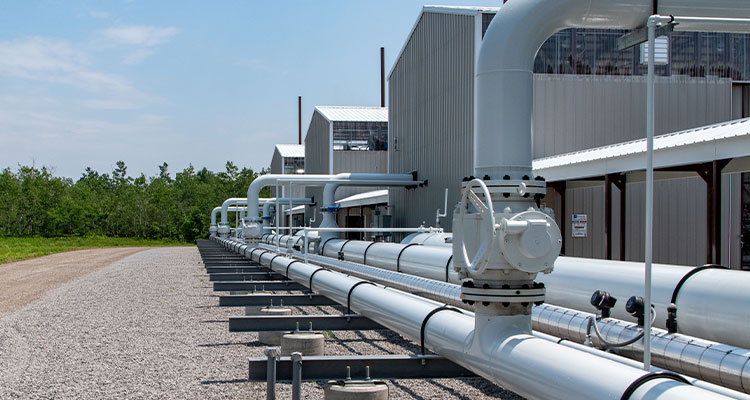
Rob joins New Energy Today, along with Chief Operating Officer, Jim Schramski, to share their insight into the company and reveal the pioneering changes that have occurred over the past two years. “The last 18 months have been transformative in the sense that several things we had planned became real,” Rob explains. “In the first quarter of 2025, we commissioned our new facilities for carbon capture and geological storage of CO₂ and are now storing CO₂ at a rate of almost 400,000 tons a year in two different geologic reservoirs – 20 percent for enhanced oil recovery, and, more importantly, 80 percent into permanent geological storage.”
Jim further explains: “We produce about 55 percent of Michigan’s natural gas supply; that’s production, not consumption, as Michigan imports most of its gas. Gas produced from the Antrim Shale is biogenic and contains between five-and-30 percent CO2 which is stripped from the natural gas and historically vented into the atmosphere.” Rob continues: “Capturing and sequestering this CO₂ means the gas we supply has about 44 percent lower carbon intensity than conventional fossil fuel natural gas. The wellhead to sales emissions are 44 percent lower than gas you can buy at Henry Hub, and we’re hoping to interest utilities in purchasing this kind of natural gas.”
Decarbonizing energy generation
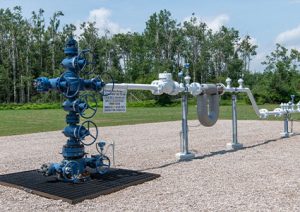
In collaboration with Waste Management and North American Power, Riverside has also begun production at its first renewable natural gas (RNG) project, purifying landfill gas to produce sales grade methane – one of the first projects in the United States capturing and injecting the CO₂ from the landfill gas into reservoirs for enhanced oil recovery (EOR), as opposed to venting it into the atmosphere. “Most of these landfill RNG projects remove the methane but vent the 30-40 percent CO₂ that they separate,” Rob elaborates. “That’s where we’re different. The RNG industry has done an amazing job, but it’s been remiss in that landfills and RNG projects emit millions of tons of CO₂. I think CO₂ capture and storage associated with the industry is the next big thing in RNG, without a doubt.”
Jim agrees: “Fossil fuel-based energy production coupled with carbon capture is really one of the best ways to decarbonize energy production globally. It has been proven technically feasible and scalable in relatively short order. The recent enhancement of the 45Q tax credit from $60 to $85 per metric ton is proof of continuing support for such projects at the federal level in the US even while incentives for other green initiatives are rolled back. There’s a very bright future for carbon capture, usage, and storage (CCUS).”
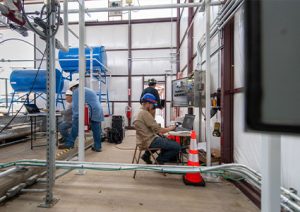
Between 2016 and 2021, Riverside tripled in size through acquisitions, gaining employees from various operators within Michigan’s Antrim Shale reservoir. Production from the Antrim Shale is responsible for placing Michigan in the top 20 states for US natural gas production (EIA 2024), with 30-plus years of productive life remaining under Riverside’s stewardship. “Initially, we recognized a need to create a strong safety culture for our 240 employees which we achieved by utilizing behavior-based safety and job safety analysis tools,” Jim explains. “From 2021 to 2024, we reduced our total recordable incident rate by almost 50 percent and our vehicle incident rate by 25 percent over the same period. Riverside has adopted safety strategies that larger operators employ and right-sized them for an onshore unconventional gas play.”
Committed to community
Not only is Riverside dedicated to workplace safety, but its commitment to Northern Michigan runs deep. The pair highlights their sense of responsibility and awareness for sustainability and the surrounding community: “Given our footprint, our practices naturally have a big impact on the communities across the 150 miles in which our operations span. We take that responsibility seriously by prioritizing safe operations, caring for the land, and focusing on environmental stewardship while delivering affordable, reliable energy. In addition to paying royalties to more than 12,000 recipients, we believe our most meaningful impact comes from being a mindful operator, supporting employees, protecting the land, and continuing to modernize our operations.”
Regarding economic development, Rob says: “This area has suffered a lot over the last three decades, with many of the companies who supplied the Detroit automobile industry closing down. Owning one of Michigan’s great resources means we want to package that energy to stimulate economic development. We’re trying to attract companies by offering not only natural gas, but carbon capture facilities they could plug into. We’ve got 2200 miles of pipeline infrastructure we’re trying to use as a grid for new industry to harness clean energy, bring in much needed investment and create more jobs.” Jim adds: “Over the past two years, our CCUS and RNG construction projects have generated over 50,000 man-hours of work for our contractors and their highly skilled laborers.”
A promising combination
For 2026 and beyond, Riverside’s priorities include working with commercial and industrial companies to bring new gas power generation, while using gas to provide carbon capture services to others. “We’re talking to companies that are producing several million tons per annum of CO₂ emissions in mid to northern Michigan,” Rob and Jim conclude. “In the near term, we plan to add two further Antrim CO₂ treating facilities to our capture and geologic storage system. That’s surprisingly complex because of the distance and maneuvering of both the CO₂ and the natural gas by pipeline. We also have more RNG targets on the horizon for development.”
By combining conventional natural gas production with state-of-the-art carbon capture, along with RNG projects, respect for communities, and a healthy economy, Riverside is demonstrating a viable path forward for traditional energy companies looking to embrace the clean energy transition.
