Ohmium International is powering the green hydrogen transformation
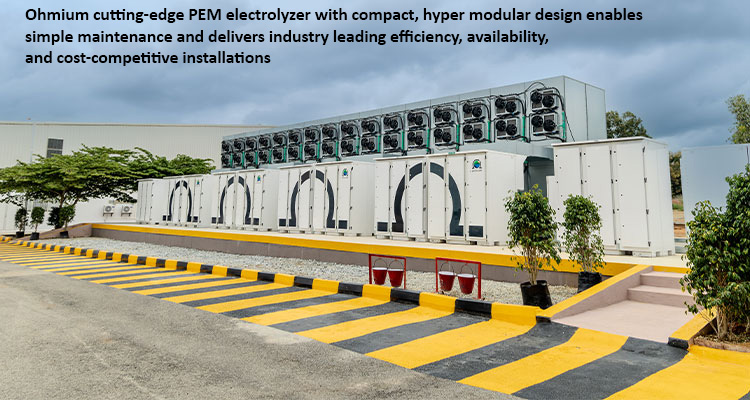
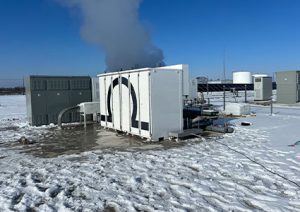
Founded in 2019 by Arne Ballantine and Kirsten Burpee, Ohmium International (Ohmium) designs, manufactures, and deploys modular, scalable Proton Exchange Membrane (PEM) electrolyzers for cost-competitive green hydrogen production. Headquartered in the San Francisco Bay Area, California, USA, with manufacturing facilities in India and operations worldwide, Ohmium has established itself as a global leader in green hydrogen solutions for the energy transition. The company’s modular PEM electrolyzers are rugged and built for outdoor operations in temperatures ranging from -40°C to 55°C. They integrate seamlessly with renewable energy sources like solar and wind, providing flexibility and grid stability.
Leadership and Investment
Dr. Markus Tacke, who joined Ohmium as Chief Executive Officer in July 2025, brings over 22 years of experience from Siemens and a proven track record in renewable energy sector leadership. He explains the company’s funding journey: “We started as a small start-up with limited funding. However, our most recent funding round came in 2023, when we secured $250 million from the TPG Rise Climate Fund. Our investors share our belief in the hydrogen economy and have been instrumental in launching our product and bringing it to industrial applications.”
Arne Ballantine, co-founder and former CEO, steered Ohmium through its formative years, developing a robust internal PEM supply chain scalable to gigawatt-level demand and with product deployment in three continents. Working alongside Arne Ballantine, Dr. Chock Karuppiah, Chief Science and Technology Officer, has been instrumental in building the technical foundation of the company’s supply chain, bringing deep experience in electrochemistry and materials science to enable mass production of Ohmium’s advanced PEM technology. The founding team has brought over 50 years of combined electrochemical expertise from NASA, Los Alamos National Laboratory, the US Navy, and leading renewable energy companies into Ohmium’s innovation engine.
Breaking the iridium barrier
The Ohmium team’s extensive combined experience in PEM electrolyzer research and development has driven groundbreaking advances in iridium reduction. The company’s dedicated R&D operation in Chennai, India, where electrochemical experts work continuously on advancing the technology, has positioned Ohmium years ahead of industry targets.
“One of the key goals across the industry is to reduce dependence on iridium, a rare and expensive metal central to PEM technology,” Dr. Markus Tacke explains. “The industry set a target of ten GW (gigawatts) per ton of iridium by 2030. We exceeded that target significantly in 2025, achieving 18 GW per ton.”
Ohmium’s progress stems from rigorous three-stage testing, moving from micro tests through bundle stack to full production, with more than one million hours of operational testing accumulated. The company aims to double utilization efficiency to 36 GW per ton within another year, ultimately targeting near-zero iridium usage within a decade.
Global project portfolio and strategic expansion
Ohmium has progressed from prototypes to 10 deployments across Europe, Asia, and the United States, partnering with clients in mobility, logistics, infrastructure, refineries, and manufacturing. Two significant European refinery projects are currently underway, with equipment shipped and commissioning expected in 2026. “With green hydrogen approaching cost parity with grey hydrogen in Europe, the case for refineries to switch is becoming increasingly compelling,” says Dr. Tacke.
Ohmium’s work with the Indian government is important to the company’s global expansion. Through the National Green Hydrogen Mission’s SIGHT program, which targets five million tons of capacity by 2030, Ohmium has been awarded 137 MW (megawatts) across TRANCHE I and TRANCHE 2. “Our Bangalore and Tamil Nadu sites house assembly and stack production facilities that are designed for a capacity of 2 GW and are built to scale further,” Dr. Tacke confirms. “New collaborations in India and Europe, particularly for refinery applications and ammonia production, offer major growth opportunities as we expand.”
Beyond hydrogen production: grid stability services
A key differentiator for Ohmium is its PEM technology’s ability to actively contribute to grid stability, positioning electrolyzers as intelligent grid assets rather than passive loads. “An electrolyzer should be a well-integrated element within the grid,” Dr. Tacke explains. “Ohmium PEM technology can follow grid fluctuations and aid in grid stabilization.”
Ohmium’s technology features
dynamic ramping that responds to solar and wind output variations, maximizing renewable energy utilization to optimize supply and demand. This flexibility is enhanced by power connections supporting both AC/DC and DC/DC configurations. When paired directly with renewable sources through DC/DC connections, the system eliminates unnecessary power conversion steps, reducing project CapEx and improving efficiency.
The path forward: learning from wind and solar
To understand where hydrogen is headed, Dr. Tacke draws on his extensive background in the renewables industry. “The electrolyzer industry stands at a pivotal inflection point similar to the early phases of wind and solar development. More innovation and industrialization lie ahead. Solar costs have decreased much faster than predicted, with solar becoming the cheapest electricity in most markets. I believe hydrogen will follow the same trajectory.”
Looking ahead, Ohmium’s product roadmap is clearly defined. Currently deploying its Mark 2 technology, Ohmium Mark 3 is expected this year, with Mark 4 and Mark 5 to follow within the five-year horizon. “Each generation means larger scale, better efficiency, and a more compact footprint,” Dr. Tacke explains. “Think of it like building blocks: if you build a ten MW plant with our technology and want to scale to 100 MW, you simply add more of the same and expand.”
In five years, Dr. Tacke envisions deploying the first stacked electrolyzer installations: compact, multi-level structures that maximize output within a minimal footprint. Ohmium has already demonstrated high power density with its Lotus Mark 3 electrolyzer, achieving a compact total land usage area of 29.7 square meters per MW, including space for maintenance and access in its horizontal installation.
Manufacturing scale and efficiency
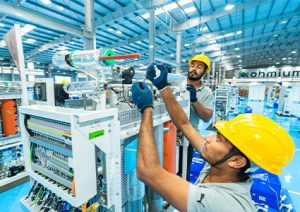
By implementing best practices of standardized, high-quality, and efficient manufacturing, Ohmium can build systems that achieve superior performance at competitive costs. This standardized approach enables factory production to scale up quickly to meet growing demand, with additional cost savings as capacity expands.
The company’s state-of-the-art gigafactory in Doddaballapura, just outside of Bengaluru, India, covers close to 14,000 square meters of production space and is ramping up to ship two GW of fully assembled and tested electrolyzer systems annually.
Conclusion
Ohmium’s ambition is rooted in the conviction that green hydrogen is not a niche solution but a fundamental pillar of the global energy transition. By reducing iridium usage to 18 GW per ton, achieving industry-leading efficiency of 48 kWh/kg,
and developing modular systems that integrate seamlessly with renewable energy and grid infrastructure, the company is making green hydrogen economically viable today, not tomorrow.
With its combination of deep technical expertise, strategic global partnerships, breakthrough innovations in materials science, and a clear vision for scaling production, Ohmium International is uniquely positioned to help power the green hydrogen transformation needed to achieve global decarbonization goals.
